Design features of Rodelta CVP pull-out.
Concrete Volute Pumps are, due to their specific characteristics, used in a variety of high flow applications such as power generation industries, as well as desalination, oil & gas, irrigation and flood control applications. The characteristics of the CVP enable a wide operating range under which the pumps can operate. Besides operating range we need to distinguish the mode of operation. For instance CVP pumps can be used in the power market as cooling pumps and operate 24 hours, 7 days a week. Another perfect fit for the CVP pump is for storm water applications, mainly due to great reliability of the design. In this market we see the pumps not running for months, however when the time comes it must do its work immediately and without failure.
These different operating conditions call for different solutions. Rodelta’s CVP is developed in such way that there are suitable designs for every application. For example, the pump can be supplied with a stuffing box gasket, which is very functional in storm water applications. For continuous operation, however we would recommend to use a Liquidyne seal. The Rodelta design offers the possibility to let the pump develop along with your business process or changing circumstances. A pump supplied with a stuffing box seal can easily be converted to a Liquidyne seal without having to make any structural changes to the design or station. The CVP has flexible features in the design, because we know that our products have a long design life and circumstances can change. Taking into consideration the climate changes and the market needs for water and energy.
Shaft sealing options CVP
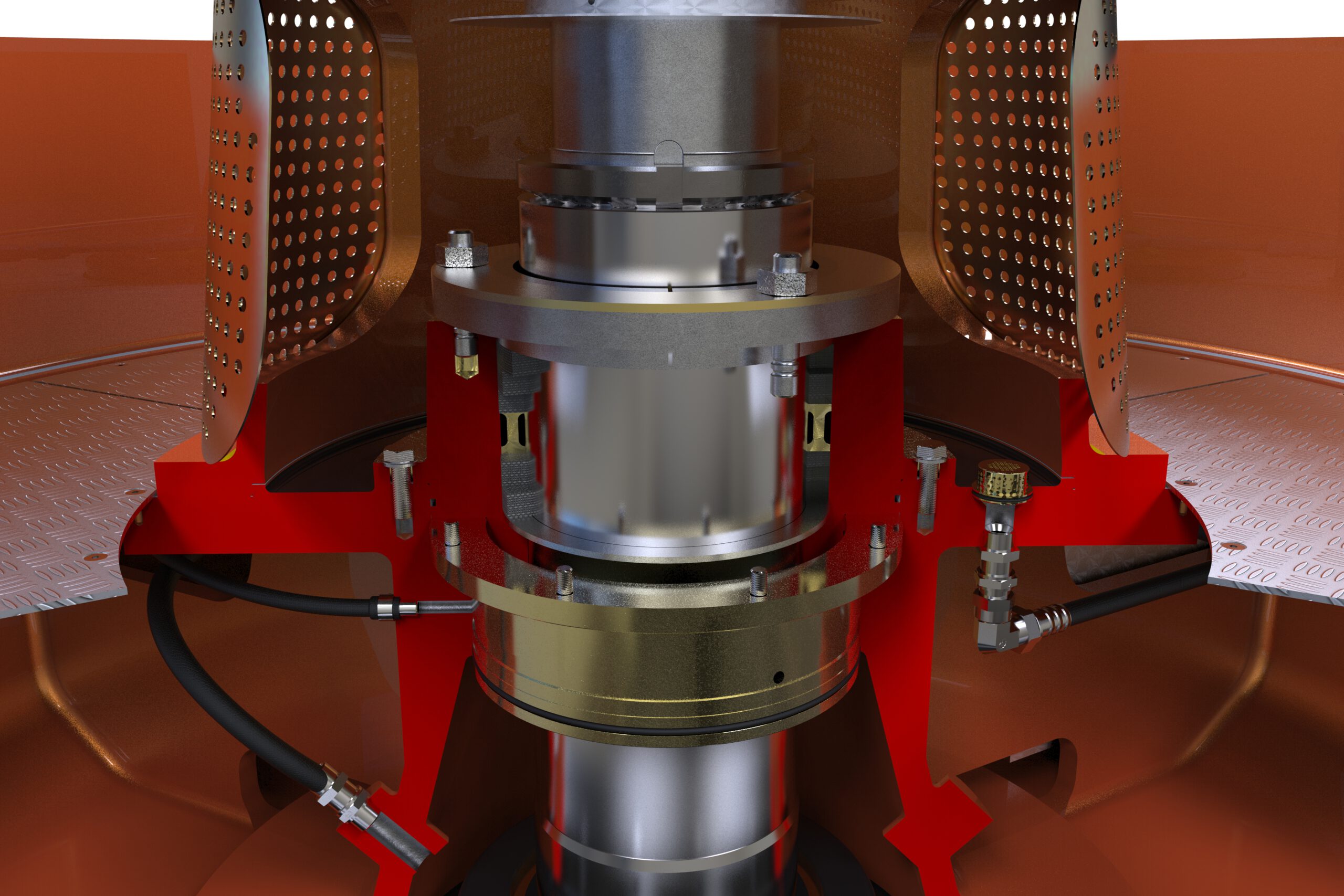
CVP stuffing box execution
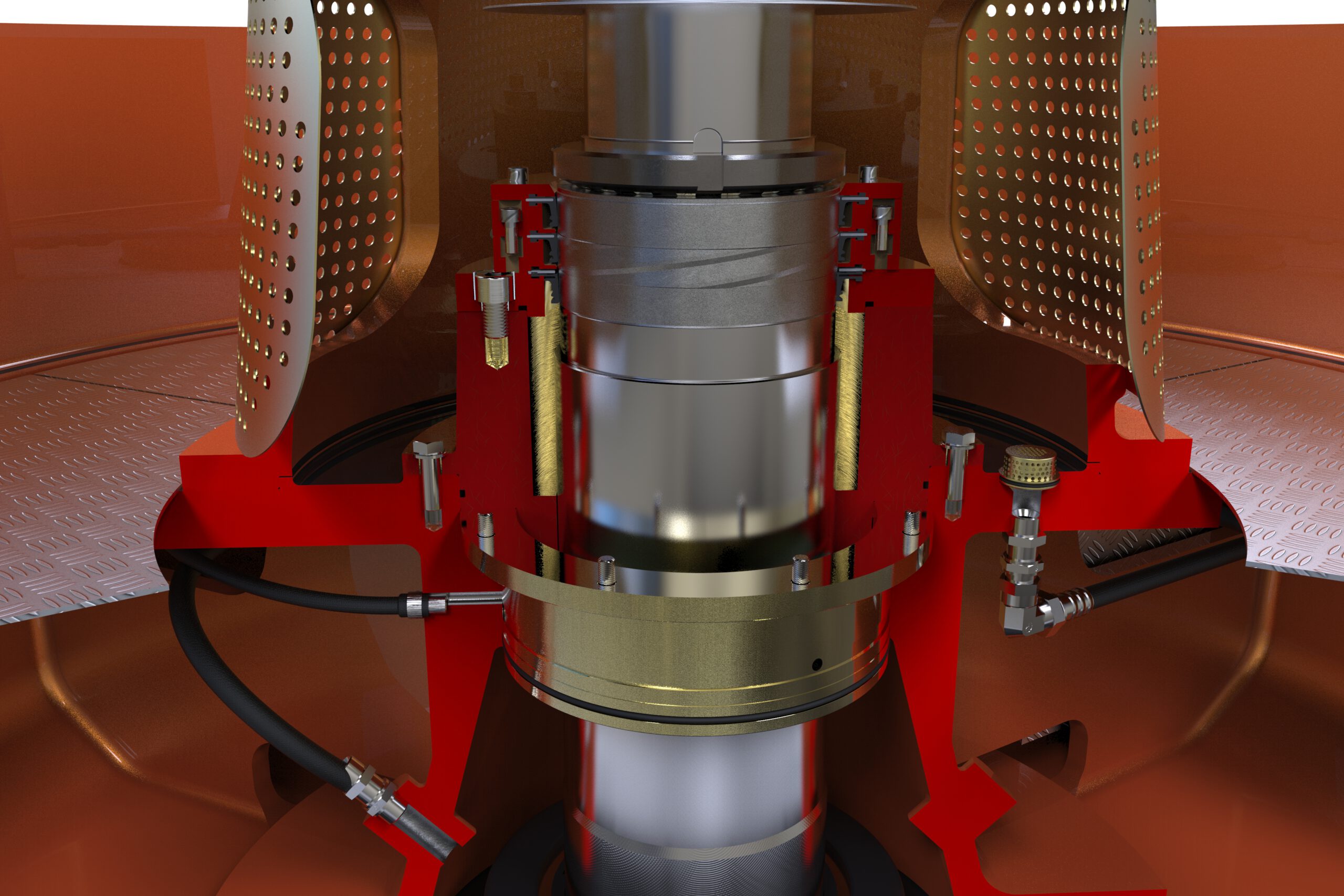
CVP Liquidyne execution
The bearing design of a CVP is often determined by the discharge head. Similarly, Rodelta has several forms of design execution. A bearing design of the CVP version with slide bearing has a low position in the pump, which results in a short impeller overhang and reduces the radial forces on the shaft.
The plain bearing has an ingenious flushing construction. On top of the plain bearing, there is a closed compartment in which water rinses under overpressure. This overpressure ensures that the slide bearing is continuously flushed. As a result, sand and other contaminants in the pumped medium have no chance of settling in the slide bearing and a long service life of the bearing is guaranteed. In the CVP version with Liquidyne, the flushing water from the pressure chamber is linked to the inlet of the sealing. This ensures that the seal is always flushed and there can be no problems with the seal running dry.
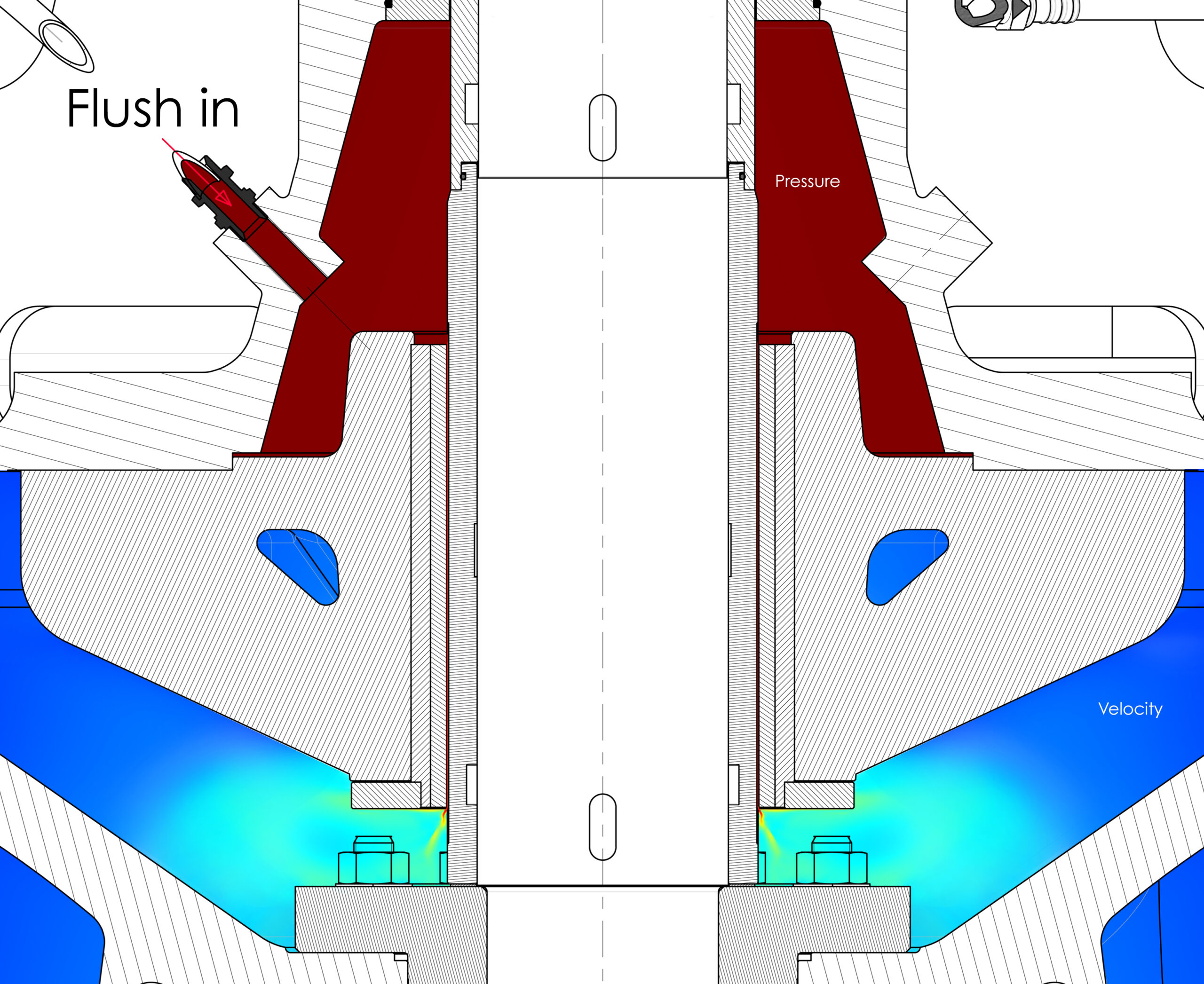
Flush CVP slide bearing execution
The CVP is always equipped with an inflatable seal that can seal off the flow of fluid along the shaft to the stuffing box. This seal can be inflated when a set of packing from the stuffing box need to be replaced. This allows replacement under circumstances where the water level is higher than the stuffing box level.
At a CVP execution with stuffing box gasket, the leaking water will be collected in the space inside the bearing pedestal. From this point the water is led to a central collecting tank. In the collection tank there is a level sensor that starts a bilge pump when the tank is full. The water will be pumped back to the suction of the pump inlet from the station.
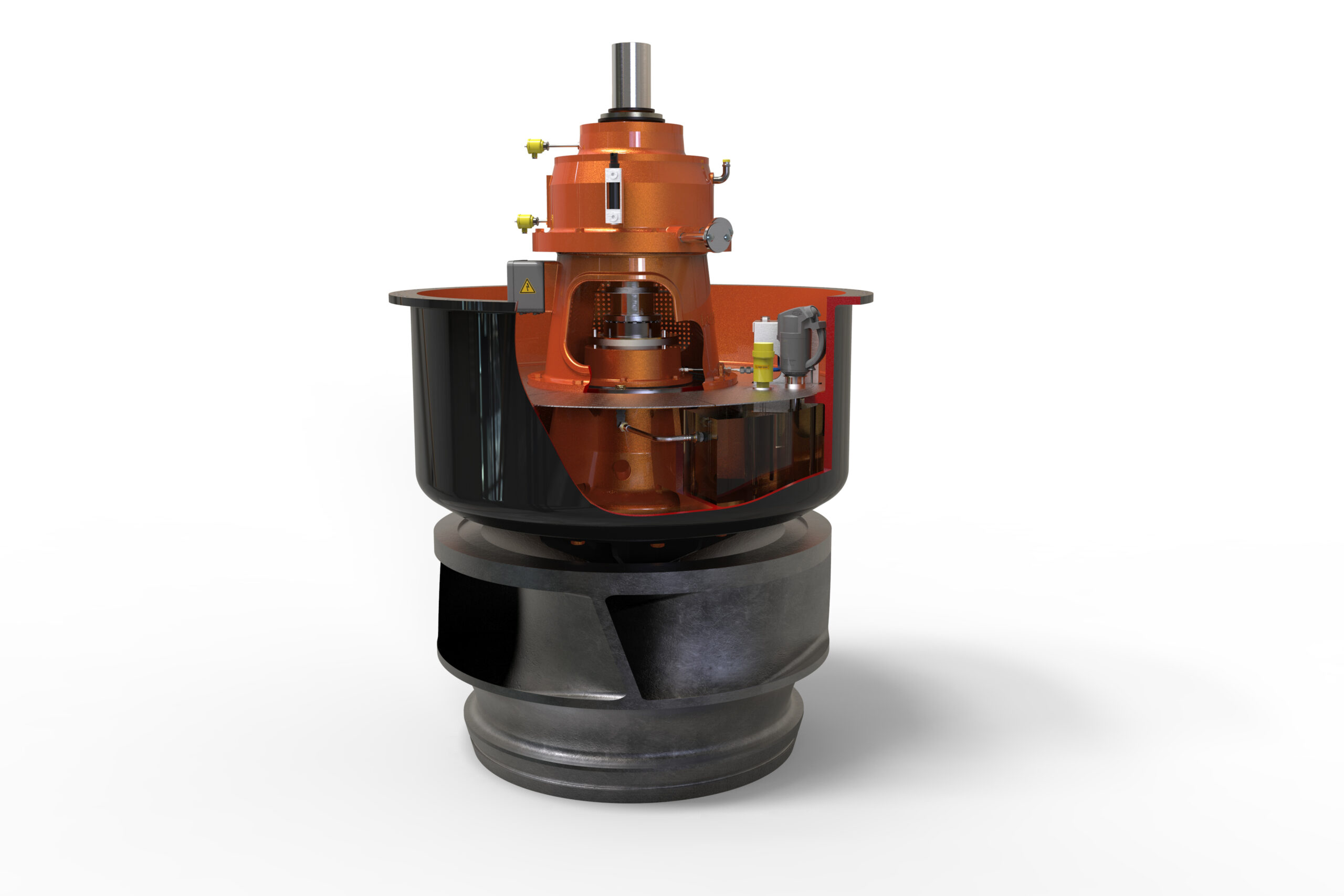
CVP central collection tank
All Rodelta CVP’s have a central connection panel. This is a central panel where all water and air connections are gathered. All air and water connections are kept separate from the electrical connections. The connection panel is located to the right of the inspection hatch. The central cable box for the optional monitoring systems is on the left of the inspection hatch. This makes it easy to disconnect the pump when dismantling is required in case of maintenance.
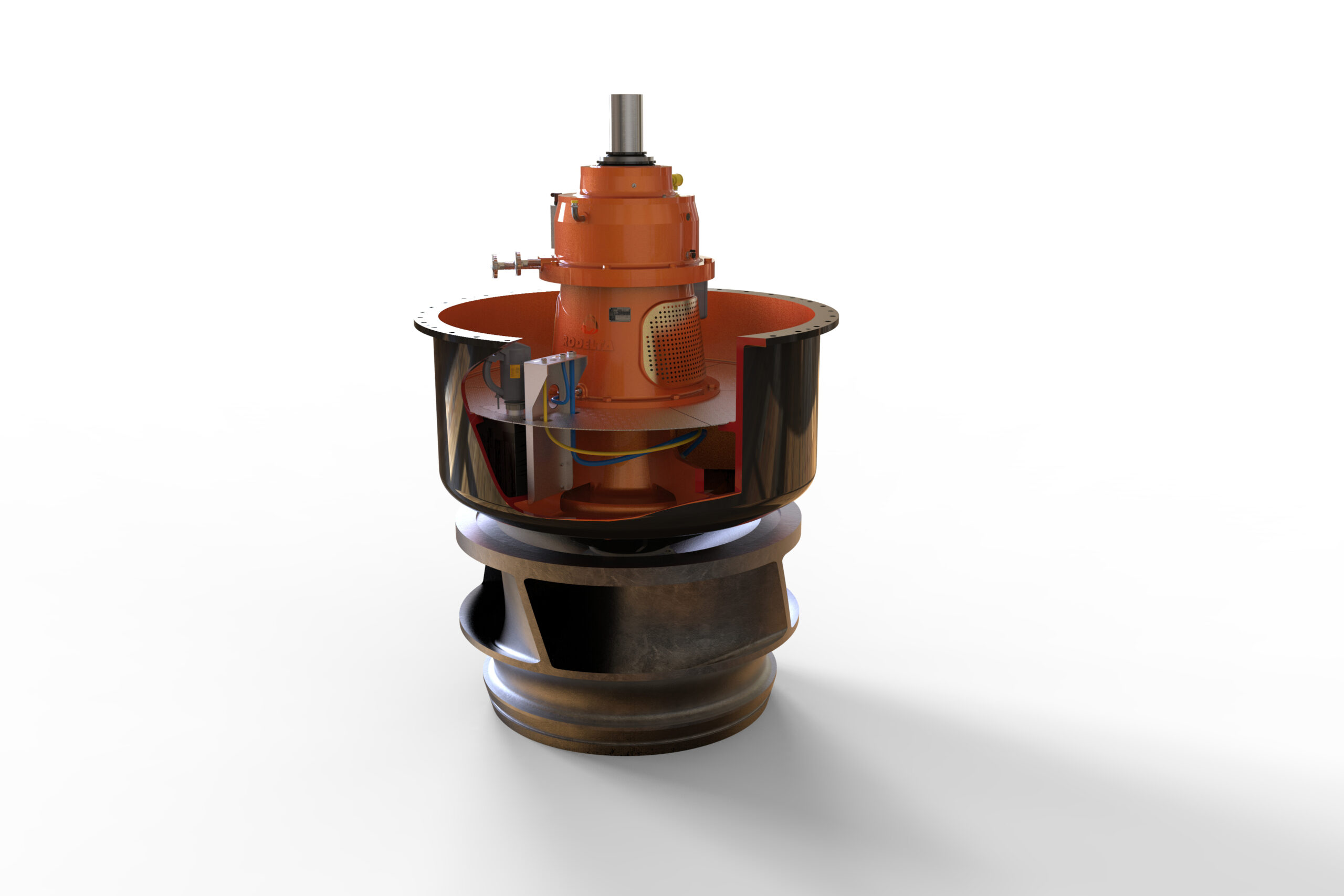
CVP central connection panel
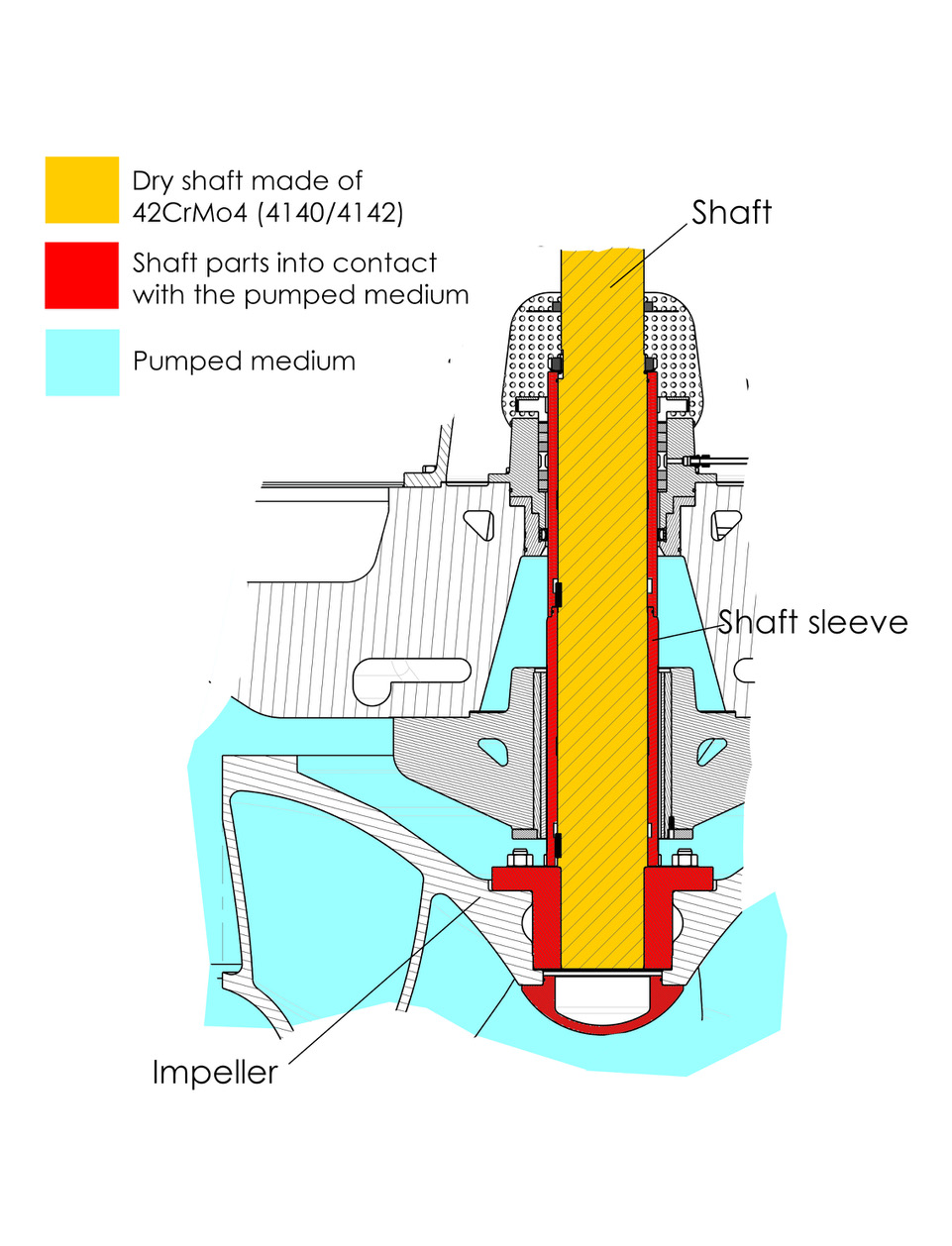
The pump shaft construction of the CVP is a so-called dry shaft construction. This means that all shaft parts that come into contact with the pumped medium are made of high-quality corrosion-resistant materials. This includes the forged hub to which the impeller is attached by means of pins. The pins ensure the transfer of all forces to the shaft. The hub is attached via a crimp connection to the 42CrMo4 (4140/4142) drive shaft. This construction in combination with the choice of materials ensures optimum strength and a low-maintenance design.
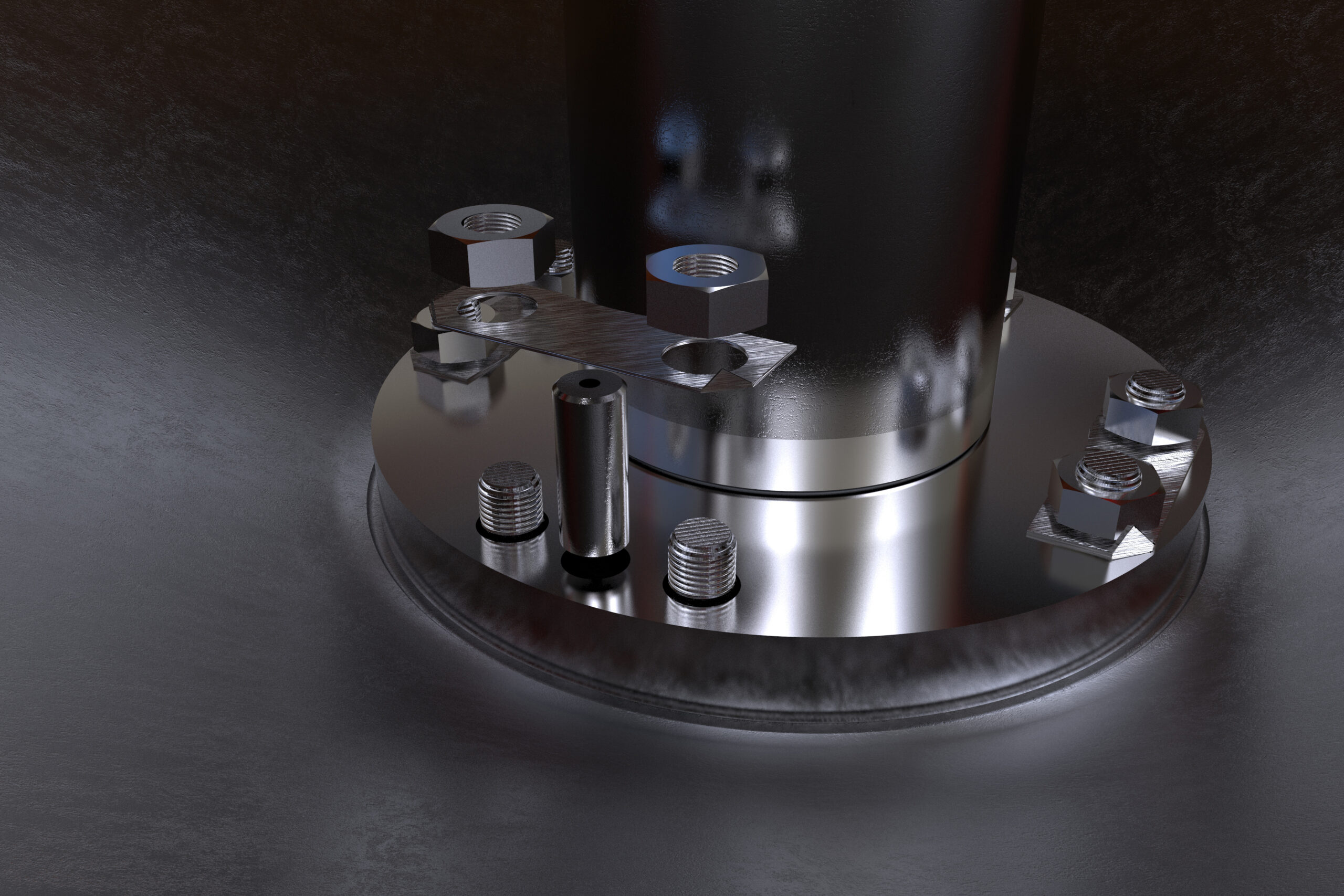
CVP force transfer pin construction
The top bearing of the CVP consists of an oil-lubricated spherical bearing with a grease-lubricated double spherical bearing above. The construction is designed to enable the shaft adjustments by means of a mechanism at the bearing. This allows accurate adjustment of the impeller with the sealing ring (= clearances), which contributes to the high efficiency of the Rodelta CVP.
In an environment where processes are not always predictable, situations may occur in which the forces on the rotor unit are reversed, the so-called ‘upthrust’. For this reason the Rodelta design has a bearing that is also a sprung. This ensures that the rollers remain in contact with the bearing at all times and no damage can occur due to a hit in the bearing.
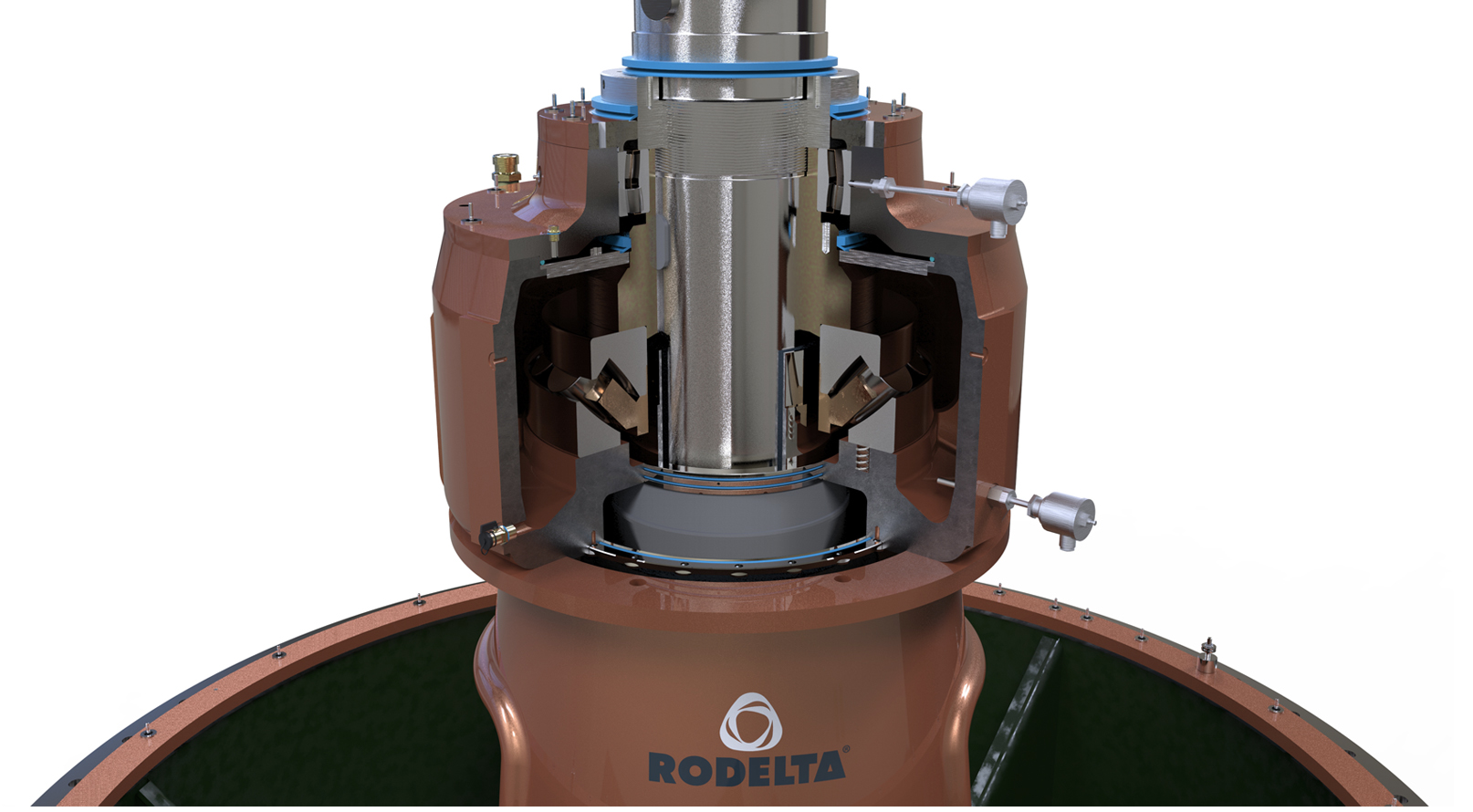
In situations where cooling of the bearing is necessary, because of the high power outputs, the CVP bearing has a cooling chamber. This is different compared to the design of other CVP manufacturers who are using cooling coils. In the event of leakage from these cooling coils there is an immediate need for repair in order to prevent further damage, because water in the lubricant leads to serious damage to the bearings The CVP construction is designed in such a way that in case of leakage of oil or water, this will be visible before water and oil come into contact with each other. This allows the pumping process to continue as usual but a planned repair can be carried out at a later date. It is obvious that there is leakage but there is no mixing of water with oil yet. Highly desirable if your pump is a crucial link in your business process and cannot easily be switched off.
The Rodelta CVP can be supplied in different specific speeds with an open or closed impeller design. The impeller rotates in an impeller wear ring and can be neatly adjusted using the previously mentioned upper bearing adjustment construction. This contributes to the high CVP efficiencies Rodelta is known for.

P.S.
There are several execution forms of Concrete Volute Pumps see also ACVP SCVP and CVP.
Rodelta also has the knowledge and expertise to design these pumps in a fish-friendly execution. More information can be found here.
For project example fish-friendly concrete volute pump execution see pumping station Orveltesluis.