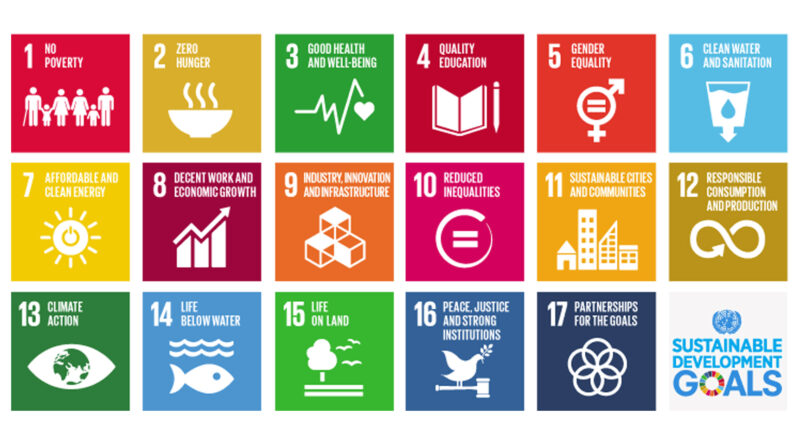
Rodelta supports your sustainable development goals (SDG) in the field of pump technology.
Due to increasing concerns about climate change and the impact of business activities on the environment, the European Union (EU) has announced the Green Deal. This initiative aims to make Europe climate-neutral by 2050 while promoting economic growth.
As part of the Green Deal, the EU has introduced the Corporate Sustainability Reporting Directive (CSRD), which requires companies to provide sustainability reports on their business activities. Large to medium-sized companies will have to start reporting from 2024. In these reports, companies must provide information on various topics, including the United Nations’ Sustainable Development Goals (SDGs).
The SDGs are seventeen objectives established by the United Nations in 2015 as part of the Agenda 2030 for sustainable development. The goals cover topics such as poverty alleviation, health and well-being, quality education, clean water and sanitation, affordable and clean energy, gender equality, and climate action. By reporting on their activities in relation to the SDGs, companies can indicate what they are doing to contribute to a sustainable future.
At Rodelta, we understand that companies face challenges in achieving their SDGs. We want to help companies improve and achieve their goals by applying our expertise in pumps to their processes. Below are some examples of opportunities. By working together and pointing out opportunities to each other, we can contribute to a sustainable future for all of us.

RODELTA a Distinctive Vision.
Pump Sustainable Development Goals
Sustainable development goals OH2-OH5 (HZC-ETL)

In the energy market, heavy-duty API 610 pumps that meet the OH2 (HZC) design standard are often used and are considered the workhorses of the industry. These pumps are typically of the volute type. Rodelta offers these pumps as part of their product line, but also offers the OH5 (ETL) design. Both pumps are equipped with proven diffuser technology that customizes hydraulic performance for maximum efficiency, contributing to the Sustainable Development Goals. The OH5 design, also known as the “vertical Shell version,” takes this even a step further by eliminating many of the additional parts required for the OH2 design. This includes the baseplate (1), coupling (2) with spacer and keyway, coupling guard (3) with attachment, bearing housing with seals, cooling vane, shaft nuts, sight glass, oil filler, vibration sensors, ball bearings, and drainage plug (4). By eliminating these parts, problems such as adjusting, broken or skewed oil filler, not refilling oil on time, dry running of bearings, and contamination of lubricating oil are eliminated.

Besides the mechanical aspects, it also contributes to the United Nations Sustainable Development Goals. Because all components that are not used in an OH5 pump compared to an OH2 pump do not need to be extracted from earth materials. The production of these materials and casting them is also not necessary. Mechanical processing is no longer required, and transportation, etc., is also no longer necessary. All in all, a beautiful saving that will be reflected in your SDG (Sustainable Development Goals).
For more advantages of OH5 pumps compared to OH2 pumps click here.
Pump Sustainable Development Goals
Refurbished LS drinking water pump options

At Rodelta, quality is still at the core of all their products. The company is proud to have been producing pumps for many years with a long lifespan that are suitable for reuse through an upgrade for another hydraulic application. This vision was recently highlighted with a customer who saw the benefits of cost reduction and greater sustainability. Rodelta provided a second life for pumps that had been in use for 26 years. Wear parts such as shaft bushes and bearings were replaced, and the pumps were equipped with new hydraulics suitable for the customer’s new application. Rodelta’s hydraulic team guided this project from start to finish, using their many years of experience in hydraulic and mechanical design.
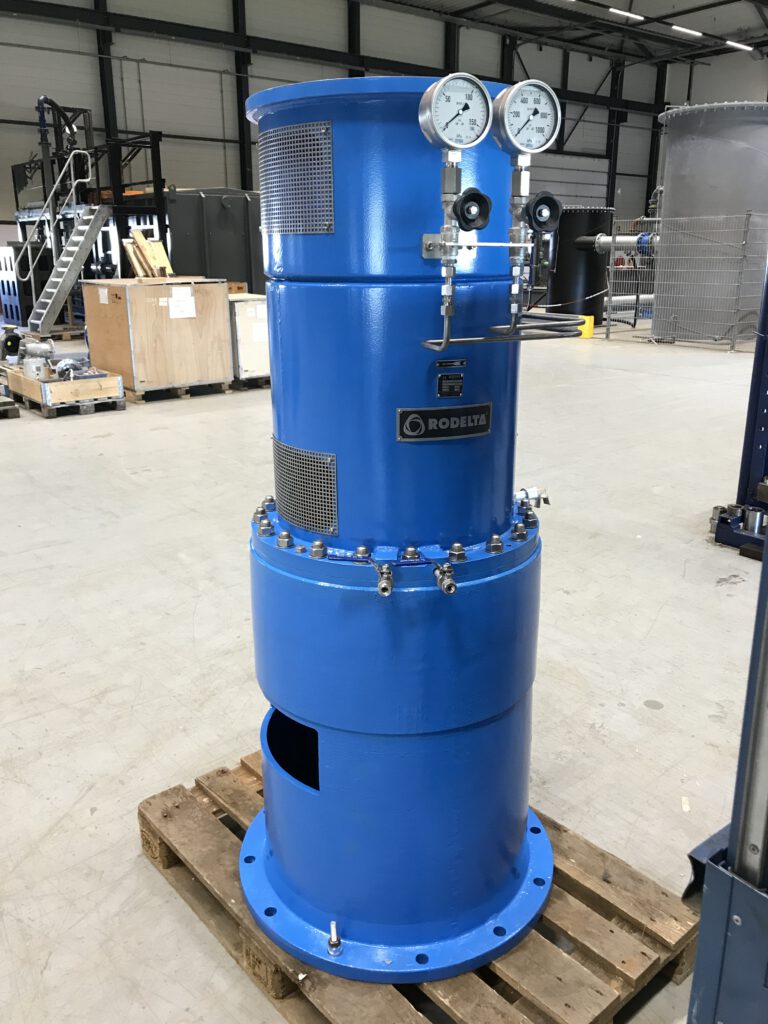
As a result, a pump was created that delivers higher performance due to improved efficiency and is suitable for another 26 years of operational use. Achieving this has a minimal impact on the environment. This is because the large cast parts have been reused, making the extraction of raw materials and production of these parts unnecessary. The reduction in machining also contributes to the environmental benefit (reduction in CO2 footprint). Moreover, the relocation of this industry to countries with lower wages contributes further to savings as the logistical part of the large cast parts is also eliminated from these countries.
This is a clear example of sustainability, which may not be immediately thought of by you as a customer, but which certainly exists.
For more advantages of LS pumps click here.
Pump Sustainable Development Goals
Fish-friendly ACVP (concrete volute pump) for pumping station Orveltesluis.

Due to the current climate changes, new pump capacity was needed in the Oranjekanaal, location Orvelte in the Netherlands. As the pumps are not only responsible for water management for a large part of the Drenthe province, it also plays an important role in the fish migration route through this part of the Netherlands. Rodelta supplied a long-live Axial Concrete Volute Pump (ACVP) with a rotor unit that was fitted with a fish-friendly impeller.
Rodelta has the technology and knowledge to carry out fish-friendly or rather fish-passable pumping stations so that fish can survive these barriers and move between different waters. Making a pump fish passable goes beyond placing a fish passable impeller in the pump. The number of blades, the tipspeed, the angle of impact, the number and shape of the diffuser vanes, and the use of valves and bends etc. play also a major role. Thanks to its internal hydraulic and mechanical engineering team, Rodelta has the knowledge and skills to develop suitable solutions for new and existing pumps.
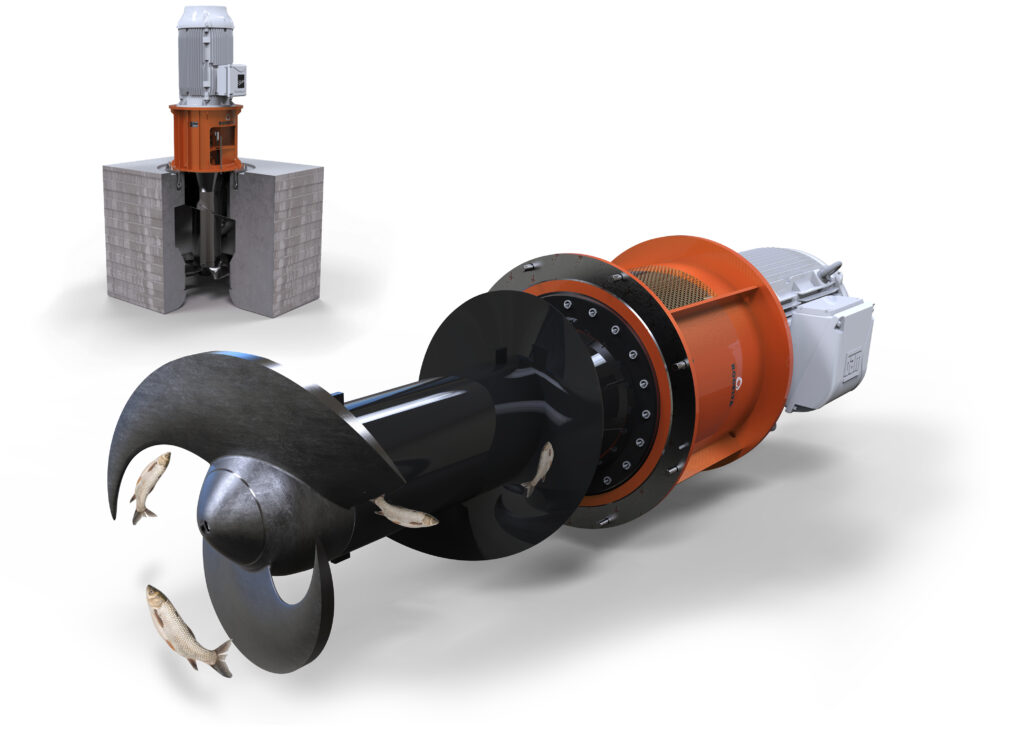 The Rodelta engineers are able to make use of their extensive experience in the field of fish passage pump designs. Because they were closely involved in the developing of the Dutch standard with regard to fish passability. (NEN8775) Actions are now underway to establish this standard at European level, to which they also contribute.
By giving space to different species of fish, the ecological balance of nature can develop well. Together we can create a better diverse world. Where nature is given priority. Smart design techniques make this possible.
For more information and pictures about this project push here
Pump Sustainable Development Goals
SynRM motors perfect match for Rodelta’s high efficiency drinking water pumps.

Rodelta has introduced drinking water pumps powered by ABB’s SynRM motors. These SynRM motors offer IE5 ultra-premium efficiency,” SynRM motors have proven to be a great fit for the application. The Rodelta pumps feature diffuser technology and are designed with a wide operating range to handle large variations in water demand. One of the characteristics of SynRM motors is precisely that they have high efficiency over this wide operating range. So the perfect match for the application.
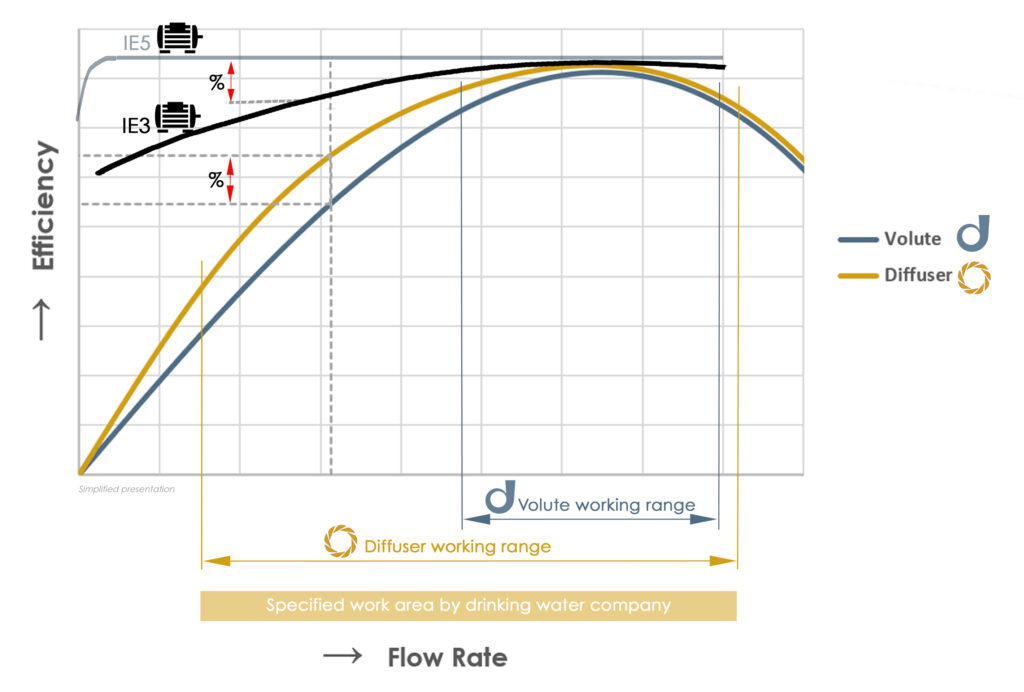
Another advantage of SynRM motors in pumping applications is their lack of slip. In an induction motor, the shaft rotates at a lower speed than the synchronous speed and this difference is known as slip. When an induction motor is driving a pump, slip can be particularly marked during the start-up phase. As a result, a larger – and therefore more expensive – motor tends to be specified. Switching to SynRM, a synchronous technology with zero slip, often means that a motor one frame size smaller can be selected, which produces an immediate saving on top of the efficiency benefits.
In addition to the technical advantages, choosing SycRM motors also has another sustainability advantage. There is a growing awareness of the use of scarce earth materials like magnets in motors, which are not only highly polluting to mine, but are also increasingly being strategically deployed in geopolitical contexts. ABB’s SycRM motors no longer use magnets, thus contributing to the sustainability goals set by the United Nations in this area as well.
This example proves that collaborating of company’s results in an even better end product that is both sustainable and even more efficient.
See full website story here
Pump Sustainable Development Goals
Performance audits for pumping systems result in reduced costs and a lower carbon footprint.
Rodelta specializes in addressing challenges related to pump systems. At Rodelta, a fundamental principle is to begin the design of high-performance pumps by considering the operational environment of the entire system. This system-oriented approach forms the basis for Rodelta’s pump design, providing a comprehensive understanding of the myriad factors influencing pump performance within a system and optimizing efficiency.
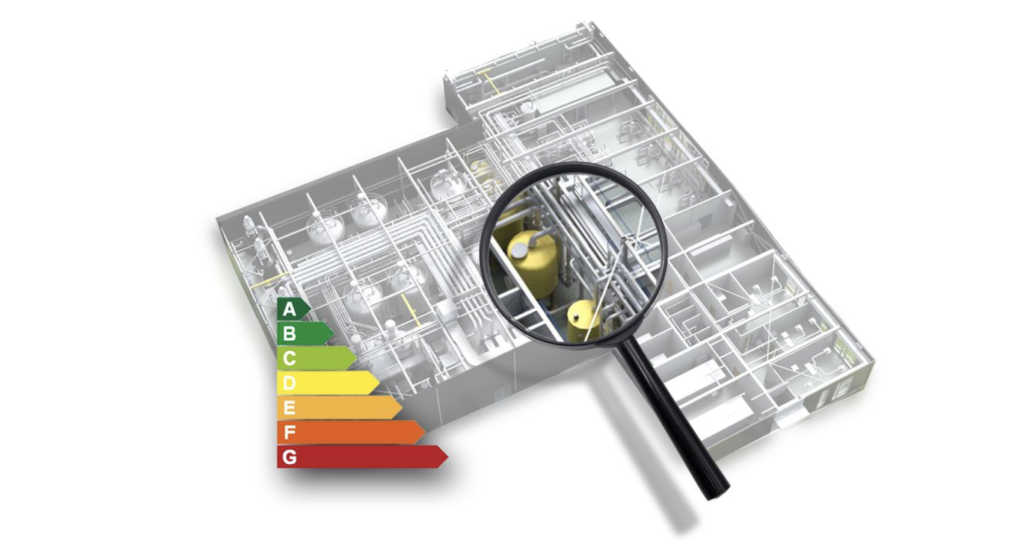
Beyond pump design, Rodelta leverages its expertise to analyze customers’ systems. In addition to offering guidance on pipeline configuration for pumps, Rodelta provides comprehensive pump system audits, known as performance audits. During these audits, customers can select from a range of criteria for analysis. Rodelta utilizes this opportunity to assist customers in achieving significant improvements and savings, measurable not only in monetary terms but also in terms of CO2 reduction.
Moreover, Rodelta is able to calculate the potential CO2 reduction after the changes have been implemented. These savings can then be seamlessly added to the owner’s sustainability report. This is fully in line with the objective of the United Nations SDG vision.
More information about performance audits here.
Pump Sustainable Development Goals
Rodelta’s Education on Efficient Pumping Systems.
Rodelta is actively involved in giving guest lectures on pumps and Computational Fluid Dynamics (CFD) at the University of Twente. During these trainings, the focus is not specifically on product trainings for the pump series, but rather on delving deeper into the criteria that impact the most efficient functioning of a pumping system. Understanding factors such as inlet flow and system losses is crucial in order to optimize the functioning of a pump. A good pump in a poorly designed system will never achieve its maximum efficiency.
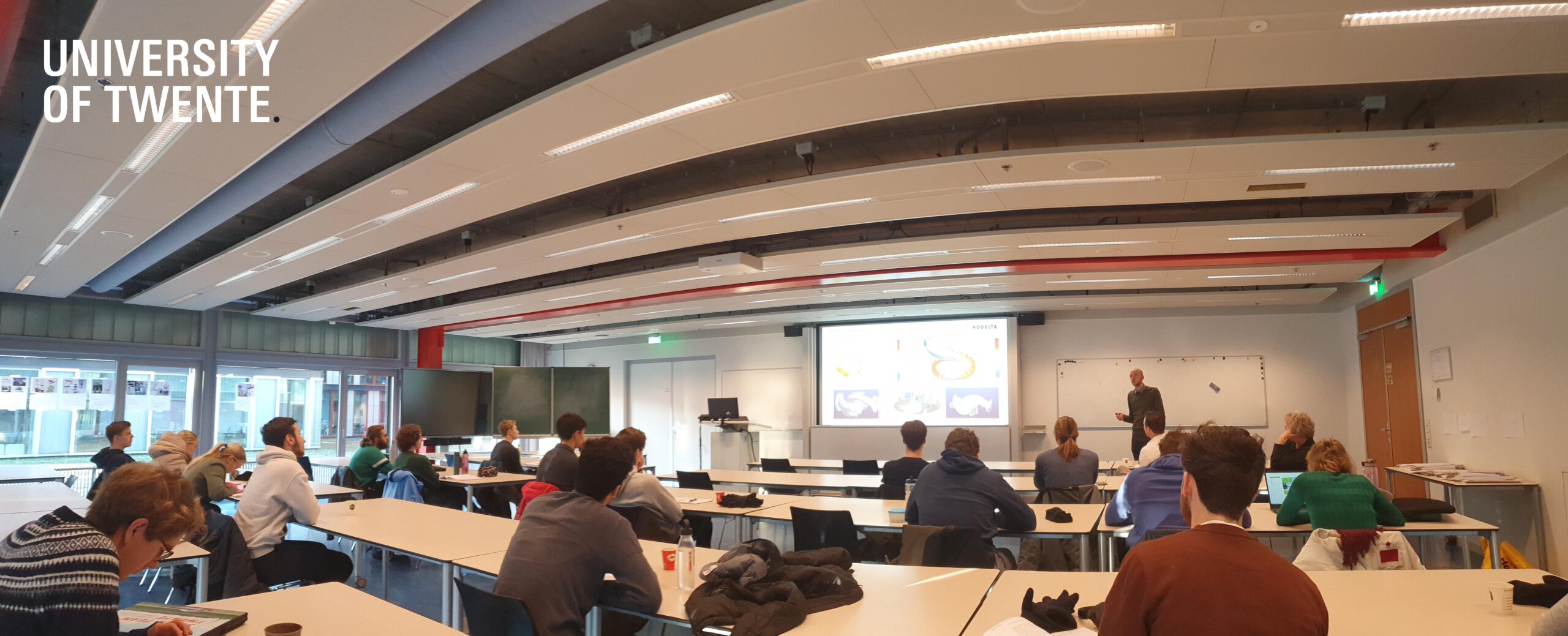
In addition to the guest lectures we provide for the university, we also offer these trainings to our customers. Through practical examples, we show our customers what to consider when choosing an optimal system with the best fitting pumps (Total Cost of Ownership or TCO). We believe that a well-designed system is the foundation for a good and efficient working pump. Therefore, we emphasize these trainings. By focusing on these criteria, we help our customers make the right choice and contribute to sustainable and cost-effective business operations.
In addition to our activities in providing trainings for the university and customers, Rodelta also offers students the opportunity to graduate on topics related to pumps. We believe that this collaboration benefits both parties and contributes to raising awareness about the possibilities for efficient pump operation in the business world.
Want to see how Rodelta itself is working and contributing to the Sustainable Development Goals? This link explains it item by item. Rodelta’s alignment with United Nations goals