Influence of pump type design on building cost.
The pump type design selection can greatly impact the arrangement of pipes within a station. By using similar principles, we demonstrate how the shape of the pump design affects the size of the building, and ultimately, the cost of construction.
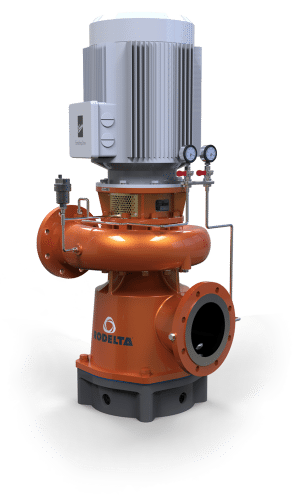
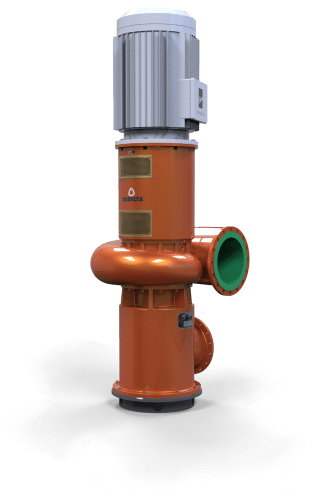
In this example, we present three pump designs to compare their impact on building dimensions. The first design is a split case pump, also referred to as a BB1, which is a between-bearings design. The second is an end-suction OH1 configuration, which is an overhung pump. The third design is a vertical LS drinking water pump from Rodelta.

The LS pump is a praised design for its compact and versatile nature. One of its key features is the ability for the inlet and outlet connections to rotate in relation to each other, which offers a range of possibilities and advantages that are not available with other pump designs. And it builds very compactly as a result This is why the LS pump is chosen as the starting point in comparisons with the other pump types.
Furthermore, the connections at the header or collector pipe, which connect the inlet pipe to the pump and the outlet pipe to the pump, must be at a 45-degree angle. This connection angle reduce energy losses by three times, when compared to an angled 90-degree connection. This reduction in energy losses result in cost savings and increased efficiency for the overall system. Also important to ensure optimum operation of pump in a system is a minimum of 5 times the diameter of the pipe in straight pipe length for the inlet and outlet of the pump. Valves in front and behind the pump and reducers also need to be fitted.
The configuration in the picture below meets this requirement.
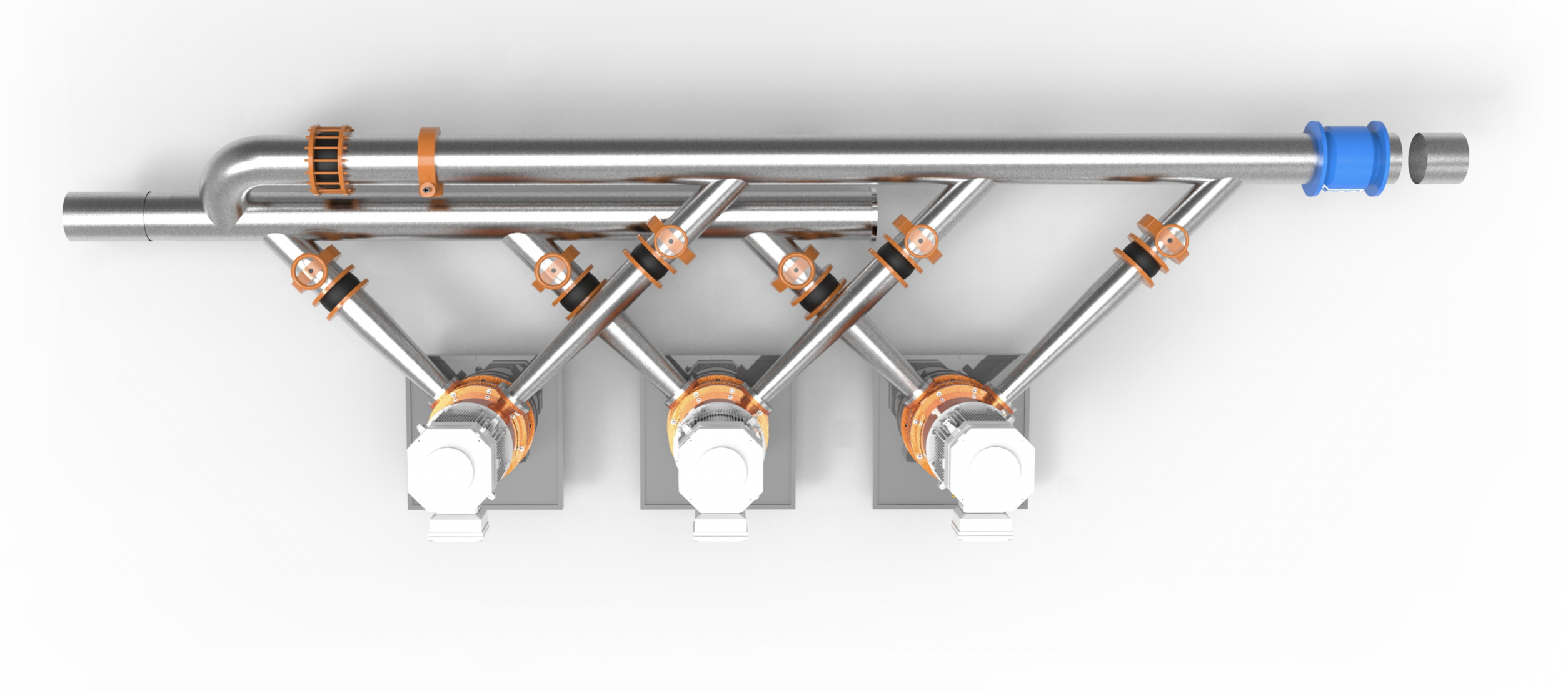
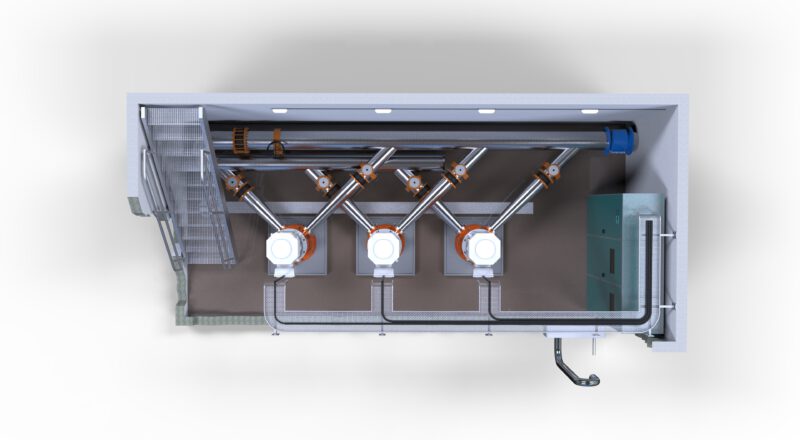
In a pump basement, this design offers good access to the pumps there is no need to climb over pipes. Also the valves are still easy to operate. The possibility of crossing the pipes allows a very compact construction. without sacrificing accessibility and pipe requirements.
A pumping station could be designed with a layout that includes a staircase leading to a basement, where a path runs alongside the pumps and leads to the power cabinets and frequency converters. This area is designed to be easily accessible, with no platforms above the pipes. Additionally, a bypass pipe is installed to enable maintenance to be performed outside of the pumps. The room is also equipped with a climate control unit for optimal temperature and humidity.


Variation BB1 to LS
In order to achieve the same layout using split case BB1 pump versions, we can observe that a considerably larger amount of space is required. As shown in the picture, both pump types are presented in an intermixed manner with their corresponding pipe layouts. It is easy to notice that the starting points are the same, including the straight lengths 5xD etc. However, the suction and discharge lines of a BB1 pump are in line, resulting in a construction that takes up significantly more space. Accessibility to the pumps is now no longer possible without creating platforms to safely step over the pipes. Additionally, the bypass pipe also takes up more space, as the headers have to be placed in the basement on both sides.
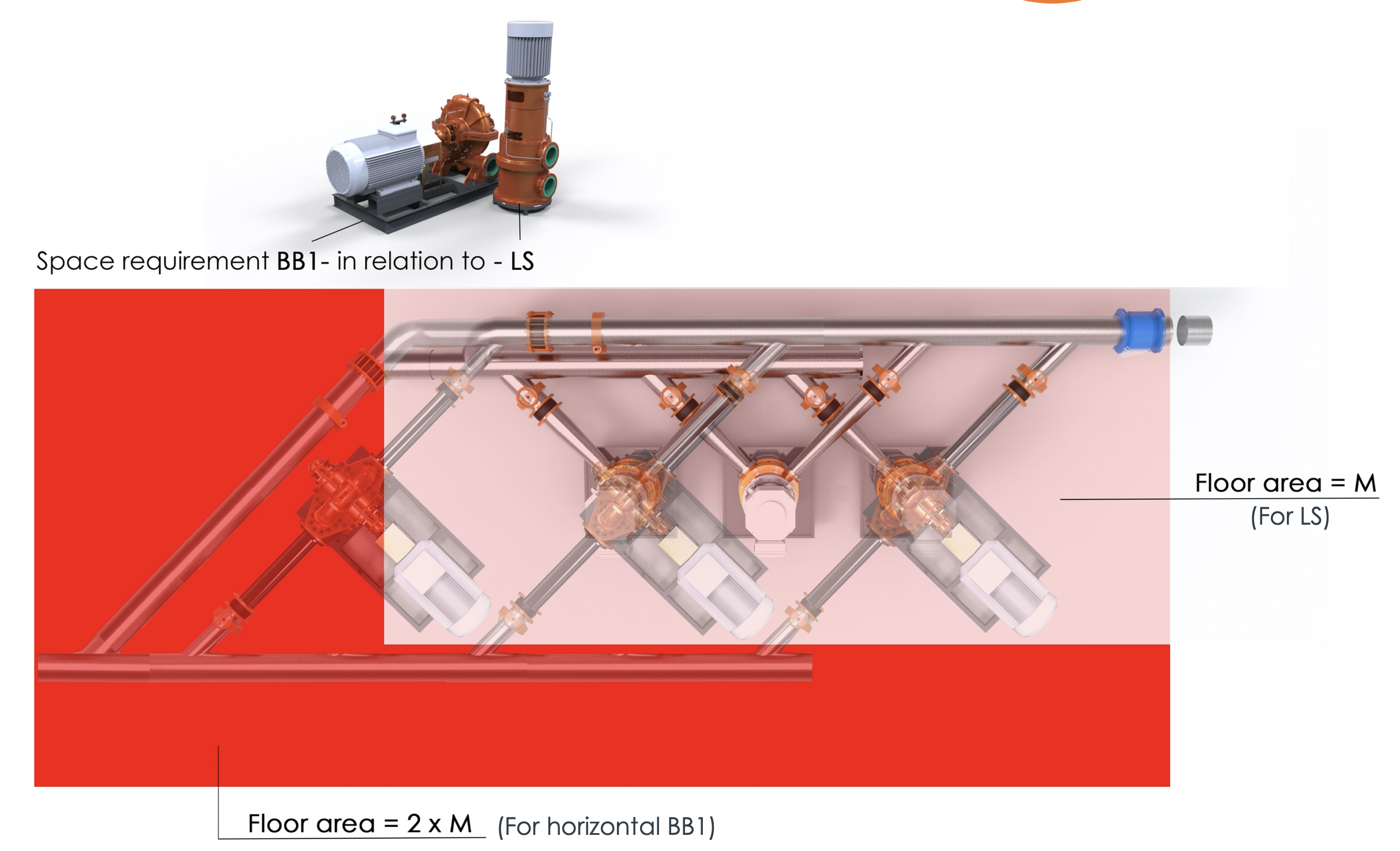
The BB1 version requires a floor area that is approximately twice as large compared to the LS variant, resulting in a significant increase in foundation cost for the pump station. This highlights the importance of considering the space requirements of different pump types when designing a pump station.
The example of the BB1 pumps illustrates that the horizontal construction of the pumps results in the motors occupying a significant amount of space. However, an alternative option is to mount the BB1 pump in a vertical position, in which the pump is positioned on its side and the motor is oriented vertically.
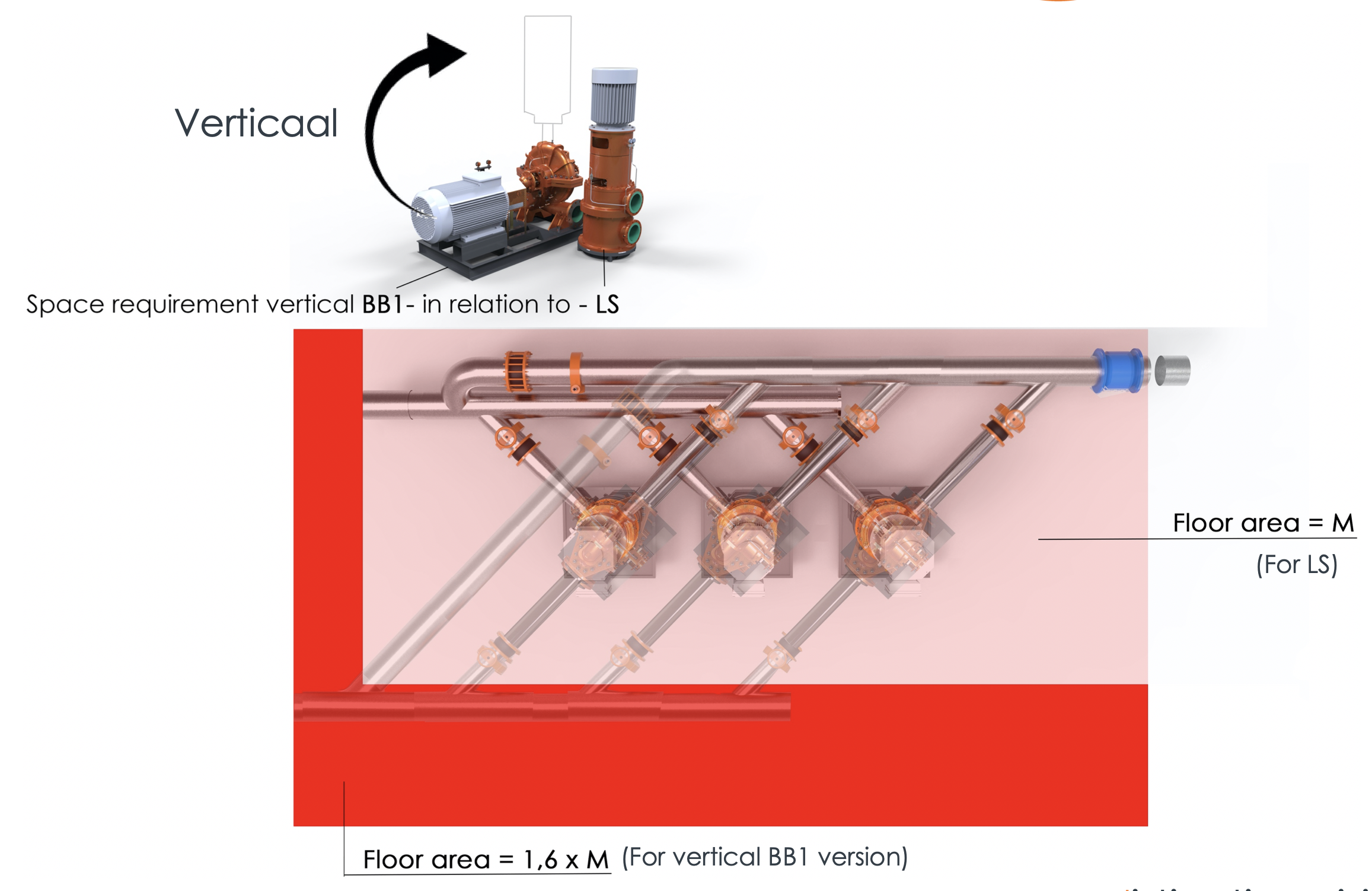
By orienting the BB1 vertically, the pumps can be consolidated, reducing the overall length of the station. However, this change does not affect the width of the station. The bypass pipe remains unchanged as it is still needed on both sides of the building. It is important to note that access to the pumps for maintenance and repairs, such as replacing seals, may be more difficult due to the reduction of the length of the pump structure in this configuration. Platforms must still be provided for accessibility to the pumps. The floor area difference with an LS pump will still be 1.6 times larger.
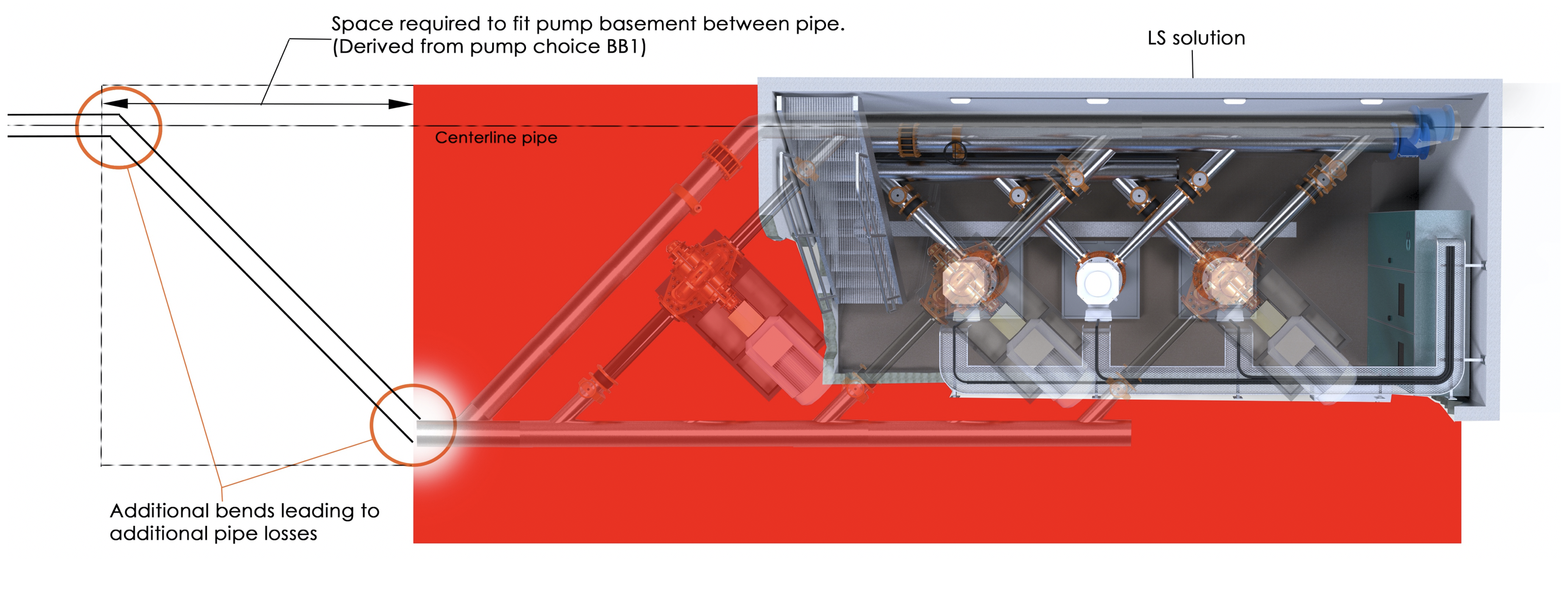
The BB1 version includes an additional phase in the construction process. With this type of design, the header piping will be located on both sides of the building. If the pump station is to be constructed between an existing straight-through pipe, the header pipe must also be routed back to the other side of the station. This not only introduces two additional bends, which increases pipe resistance, but also requires significant excavation work and space at the construction site. These additional costs and requirements must be considered when choosing this particular pump design.
Variation OH1 to LS
The end suction variation features a horizontally positioned motor which results in an increased floor space and wider station. This design is commonly used in a variety of industrial and commercial applications. The discharge pipe exits the pump vertically from the top and requires a 90-degree bend to connect to the header, leading to additional pipe loss and a reduction in efficiency compared to other pump designs. The straight length of 5xD and angle connection to the header make for a high pipe construction and reduced accessibility to the seals.
The floor area difference with an LS pump is about 1.4 times larger.

The choice of pump design plays a crucial role in the cost of building a station, as demonstrated in the examples mentioned. While size is one factor, the design of the pump can also determine the feasibility of cost-saving construction methods like prefabrication in concrete. When prefabrication is possible, it can result in substantial cost savings for which otherwise materials such as duplex or super-duplex become necessary.
However, it is important to note that the choice of pump design also increases the maintenance costs for the entire station over its lifespan. These costs can accumulate to a significant amount and potentially offset any savings from the initial purchase price of the pump.
In addition to the pump design, the design of the pump in relation to the fluid velocity and the diameter of the inlet and outlet pipes also greatly affects the overall efficiency of the pump. Diffusion and contraction pipes are known to be detrimental to energy efficiency. This is particularly true for standard end-suction pumps, which often have significant hidden efficiency losses in these areas. However, even BB1 pumps can be designed with the same fluid flow philosophy, Which in practice always requires reducers to achieve acceptable pipe fluid velocities. More information on this topic can also be found here. Or contact us and we will be happy to provide you with more information on this topic.
Team Rodelta